Bellator Health pinecone mark

CarePath

How can providers enhance patient loyalty? By getting their patients the medical appointments they need, when they need them.

Half of patient referrals are never actually completed.[1]

CarePath fixes that. It answers the phones and works the referrals for every office in a health system, booking, calling, and following up until the patient is actually seen. It is our first workflow solution on Bellator's healthcare orchestration platform, with more to follow.

Pilot in the family practice of our Chief Medical Officer, running the full workflow and scheduling appointments with real patients.

Live in pilot.Voice-native.Zero integration required.HIPAA-compliant.
The reality
Getting care shouldn't take a dozen phone calls.

According to research published in the Journal of Evaluation in Clinical Practice, approximately half of all medical referrals are never completed. We have studied this problem and believe the reason lies squarely in the dynamic itself: long holds, language barriers, unanswered phones, and the sheer time involved. Eventually patients and their caregivers give up and hope for the best, and the health system loses the visit along with them.

CarePath is an AI medical concierge that acts on each patient's behalf. When a physician writes a referral, it schedules the appointment around the patient's availability, preferences, insurance, and their physician's guidance. It secures the appointment, confirms it as the date approaches, and reschedules if anything changes. Patients and caregivers get to focus on the appointment itself, not the work of making it.

The phone work is ours now.

Photo — a person overwhelmed by paperwork and calls
01 / The product

One system, both directions of the phone.

CarePath deploys across a health system's offices as the concierge layer that does the phone work no one has time to do. The same voice engine handles the calls coming in and those going out. No EHR integration required.

Photo — a physician
Inbound

It answers the phone.

Patients calling to book, reschedule, or ask a scheduling question reach the concierge on the first ring, at any hour. It schedules against real availability, takes intake on the same call, and flags anything urgent or uncertain straight to staff.

Outbound

It works the referral.

When a physician refers out, CarePath matches the patient to the right provider, calls that office itself, books the appointment, and confirms with the patient. It keeps following up until the visit happens.

Insight

It shows you the network.

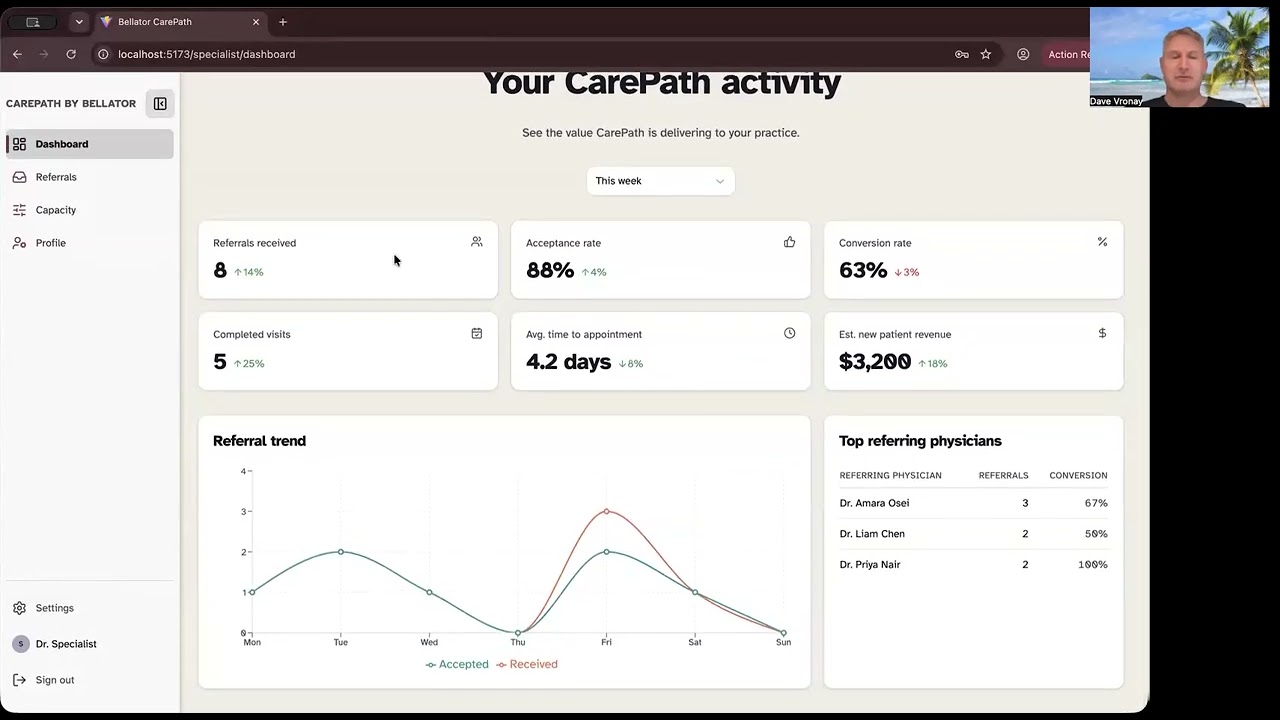
Every conversation teaches the system in real time: which insurance a practice takes this month, which referrals it accepts, who's seeing new patients, and when. That knowledge routes patients to the right provider the first time, and it compounds. Alongside it, the analytics: time to appointment, no-show patterns, referral completion, provider capacity. Coordination has always been invisible work. Now you can see it.

02 / See it work

Two demo calls, start to finish.

Both demos walk the flow end to end, from a referral to a booked and confirmed appointment. Nothing is cut.

Referral to booked visit, end to end
Demo · Outbound referral
Referral to booked visit, end to end
Open on YouTube ↗
A patient calls in and is booked
Demo · Inbound scheduling
A patient calls in and is booked
Open on YouTube ↗

Recorded product demos · sound on

03 / How it works

Two flows. One system.

Whether a patient calls in or a physician refers out, CarePath carries it through, fully HIPAA-compliant. There is nothing to integrate and nothing new for staff to learn. The process is physician-led, and a person is never out of the loop: whenever the concierge is unsure or hits a block, it stops and flags it for staff.

Inbound · a patient calls in
01

Answer

Every call picked up on the first ring, at any hour. No hold queue, no voicemail.

02

Understand

Who's calling, why, and what coverage they have, gathered in ordinary conversation.

03

Schedule

Books or reschedules against real availability. Urgent needs are prioritized; anything ambiguous is escalated to staff.

04

Office view

Requests land in a live calendar view staff check against their own calendar, or the office can connect CarePath to its calendar and it books directly.

05

Confirm

Confirms the appointment, sends intake ahead of the visit, and sets reminders so nothing slips.

Outbound · a physician refers
01

Referral

A physician issues a referral with condition, urgency, and notes, and gives the patient a passcode.

02

Intake

The patient calls one number with the passcode. Identity, insurance, and availability are captured on that call. Intake can also be completed on the web or in the app.

03

Matching

CarePath shortlists providers by physician preference, payer, proximity, condition, and the patient's availability.

04

Booking

It calls the provider offices, introduces itself as an AI assistant calling on the referring physician's behalf, settles availability in conversation, and confirms both sides.

05

Follow-up

Reminders before the visit, confirmation after it, and rebooking if anything changes.

No EHR integration required. No new software for staff. Just a phone line.

04 / For patients & caregivers

For the person managing someone else's care.

Most appointments are coordinated by someone other than the patient: a parent, an adult child, a spouse, a case manager. Care Circle gives that person one place to see everything: what's booked, what's still pending, what needs a decision. When something needs a phone call, they ask the concierge and it's handled. Care Circle is part of Bellator's longer-term vision, built on the same platform.

Part of the Bellator roadmap · Optional · CarePath runs with or without it

Care Circle
Mom's care
Cardiology consult
Tue Jul 22 · 2:15 PM · confirmed
Lab work — lipid panel
Fri Jul 25 · booking…
Post-discharge follow-up
Reminder set · 48h prior
Ask CarePath to reschedule…
Coordinating a loved one's care
Demo · Caregiver experience
Coordinating a loved one's care
Open on YouTube ↗

Book the cardiologist, move Tuesday's visit, flag that the insurance has changed, by voice or in the app. The concierge makes the calls; the caregiver stays informed.

05 / For health systems & networks

Network-wide, without an integration project.

CarePath rolls out across every practice in a health system without touching the EHR, and goes to work on the numbers a P&L and CMS Star or Vizient ratings respond to.

Photo — a community hospital at dusk
Revenue

Fewer empty slots.

No-shows drop, unfilled slots get booked, and referrals stop leaking out of the health system. It's revenue the system can generate but isn't capturing.

Readmissions

Follow-up that happens.

Post-discharge appointments get made, keeping patients compliant and reducing the health system's exposure to financial penalties.

Staff

Phones off the front desk.

The call volume comes off your front desk team, so office staff can spend their time on the conversations that help patients, not on scheduling their appointments.

Rollout

Live in weeks.

There is nothing to build into the EHR. Deployment is a phone line, so a whole network goes live in weeks, not quarters.

The business case

One flat fee per booked appointment.

No licenses, no seats, and nothing to integrate: a single predictable line item that scales with volume and stops the day you stop using it. Every fee is tied to an appointment booked onto the receiving provider's calendar. Against that fee sits what coordination failure already costs. An average full-time physician generates about $2.38M a year in net revenue for their affiliated hospital, and two-thirds of ACO beneficiaries take specialty care outside their own network. At 500,000 annual appointments, each five-point drop in no-shows returns millions of dollars in visits that were booked and lost, and timely post-discharge follow-up is associated with roughly one-fifth lower readmission risk. And the base itself grows: completed appointments are net new revenue, not just recovered revenue.

Data stewardship

We are not in the data business.

CarePath keeps patient identity only as long as the appointment it serves. Once the visit has taken place, it is removed. Transcripts are de-identified as they are recorded, with a subset retained for audit and for improving the concierge, and the operational record of every coordination belongs to the health system. What we analyze is the provider side: availability, responsiveness, time to appointment, capacity. We have no use for patient data, and we will never sell patient data.

The platform

Built to keep running.

CarePath rides the phone line rather than the tech stack, so it keeps working through every migration underneath it. Underneath is Bellator's workflow orchestration platform: long-running processes with durable execution, human-in-the-loop checkpoints, and full observability. Referral scheduling is the first workflow it runs.

Point tools automate a single step. CarePath runs the whole journey, across the calls and handoffs practices already live on.

Medicare Advantage plansHospitals & health systemsACOsEnterprise physician networks
06 / Company

An AI-native team.

CarePath is a voice product, and the team is built for exactly that: the engineering lead behind Microsoft's Cortana and neural text-to-speech, senior product design from Apple and Zoom, and a sitting chair of family medicine who is piloting CarePath in her own practice.

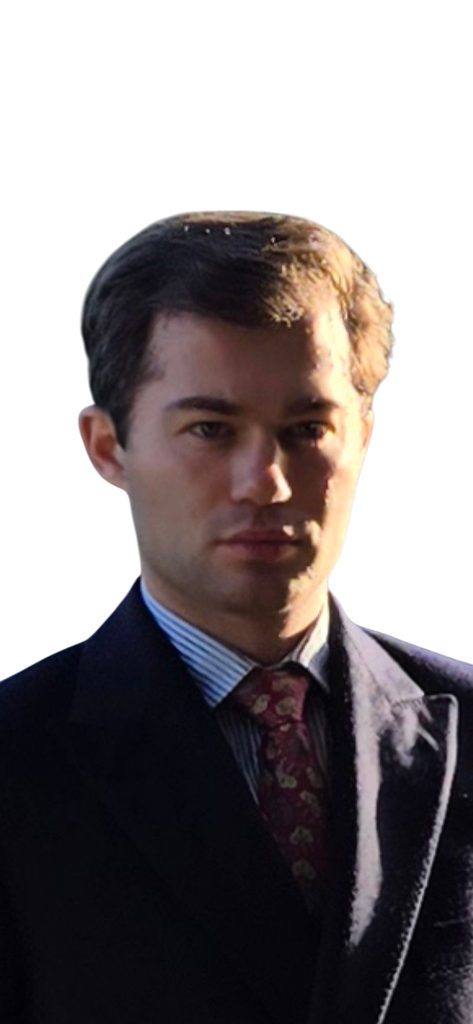
George Biamonti
George Biamonti
Chief Executive Officer
Strategy leader with a background in philosophy and complex systems. Experience guiding transformation in Fortune 500 tech and fintech enterprise GTM.

George Biamonti-Marchwalden is co-founder and CEO of Bellator. His interest in artificial intelligence emerged from his academic work in the Philosophy of Consciousness at the University of St Andrews, where he earned a Master of Arts (Honours) in Philosophy and Business Management, followed by a Master of Literature.

Before founding Bellator, George held strategic roles at Fiserv, Inc., where he led digital transformation initiatives within its Network Group, and served as Chief of Staff to the CEO at POSi Energy, a lithium-ion battery startup, where he led the fundraising strategy for the company's Series A.

His philosophical training—spanning formal logic, epistemology, ethics, and political philosophy—informs his approach to AI development. He has also studied at the Diplomatic Academy of Vienna, the University of Heidelberg, and the London School of Economics. In 2024 he was awarded the Silver Medal Pro Merito Melitensi by the Sovereign Military Order of Malta.

Edward Un
Edward Un
Chief Technology Officer
17 years at Microsoft shipping Cortana and Neural Text-to-Speech. Expert in agent orchestration and memory architecture. CTO at two startups, in Silicon Valley and Hong Kong.

Edward brings 35 years of software engineering and product leadership to his role as CTO of Bellator. He has spent the past 13 years at the forefront of conversational AI, building speech-output components for Microsoft Cortana, driving product development for Azure Cognitive Services' text-to-speech service, and, as Head of Product at Resemble AI, launching neural voice cloning products supporting both enterprise deployments and self-serve customers.

At Bellator, Edward leads the technology strategy and architecture of the agent orchestration platform, which leverages multi-tiered memory to maintain persona continuity and seamlessly orchestrate specialized agents.

Edward holds a B.S. and M.S. in Electrical and Computer Engineering from Carnegie Mellon University, and an MBA from the Haas School of Business at UC Berkeley.

Dave Vronay
Dave Vronay
Chief Experience Officer
40-year UX career. Human Interface Group at Apple, founding member of Microsoft Research Asia's design practice, Senior UX at Zoom.

Dave Vronay is a seasoned technology executive and user-experience visionary whose career spans four decades of pioneering work at the intersection of human-computer interaction and emerging technologies. He serves as Chief Experience Officer at Bellator, guiding design strategy around AI, memory systems, relational awareness, ethics, and empathic user interface.

Vronay most recently served as Senior UX Manager for Customer Experience products at Zoom, including Zoom Phone, Contact Center, and Zoom's AI products. For fifteen years prior he was Principal Researcher and Creative Director at Microsoft Research, and was a founding member of the UX and design practice at Microsoft Research Asia in Beijing.

Earlier in his career he contributed to the Human Interface Group at Apple. He is an alumnus of the University of Southern California, where he studied Cinema Production and earned a bachelor's degree in Philosophy.

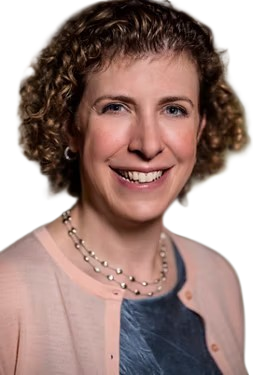
Samantha Pozner, MD
Samantha Pozner, MD
Chief Medical Officer
Chair of Family Medicine & President Emeritus Medical Staff at Atlantic Health Overlook Medical Center. Managing Partner of Summit Springfield Family Medicine.

Dr. Samantha Pozner is Chief Medical Officer of Bellator and the clinical lead for CarePath. A board-certified family physician, she is founding and managing partner of Summit Springfield Family Medicine, the practice where CarePath is being piloted, and has chaired the Department of Family Medicine at Atlantic Health's Overlook Medical Center since 2023. She also holds an appointment as Clinical Assistant Professor of Family & Community Medicine at Thomas Jefferson University.

Over twenty-five years at Atlantic Health, she has held nearly every seat from which a health system is run: two terms as President of the Overlook Medical Center Medical Staff, service on the Atlantic Health System Board of Trustees and its Executive Committee, board membership at the Atlantic Accountable Care Organization, and Vice President of Primary Care Partners. She has chaired the medical staff's quality and pharmacy committees, sat on the Medical Executive Committee since 2007, and serves on Atlantic Medical Group's Epic Ambulatory Joint Council, the governance body for the system's EHR. That operational vantage is what shapes CarePath's physician-led design: the escalation protocols, urgency handling, and human-in-the-loop workflow the product runs on.

Dr. Pozner earned her MD from the Medical College of Pennsylvania, where she was elected to the Alpha Omega Alpha honor society, and a BA in Classical Studies, cum laude, from the University of Pennsylvania. She trained at the Overlook Family Practice residency, precepted residents and medical students for a decade, and received the AAFP Foundation's Teacher Development Award.

Get started

See it on a live call.

We'll walk you through the full system, inbound and outbound, with your own workflow in mind. We can set it up this week.